


Key Highlights:
- Zoning with light helps define function and mood in open-plan kitchen layouts
- Layered lighting (ambient, task, accent) creates structure without adding walls
- Wall lighting is an effective way to mark transitions and add softness
- Lighting control (dimmers, placement, warmth) is key to flexibility and flow
- Good lighting design adapts to real life, not just the layout
Open-plan kitchens look fantastic in real estate photos — wide, light-filled and social. But living in them is a little different. When your cooking, dining and entertaining spaces all flow into one another, it’s easy for the whole area to feel either too clinical or too chaotic. That’s where lighting comes in.
Used well, lighting can shape a space without building a single wall. It can define where one zone ends and another begins — guiding the mood, flow and function of the kitchen throughout the day. And the best part? You don’t need structural renovations to make it work.
In this blog, we’ll look at how smart lighting choices can subtly separate zones in an open kitchen layout — from prep benches to dining tables — while keeping the space cohesive and flexible.
WHY ZONING MATTERS IN AN OPEN PLAN
An open-plan kitchen has to do a lot. It’s a workspace, a gathering spot, a walk-through, and often the backdrop to everything from homework to dinner parties. But when every part of the room is lit the same way, the space can feel flat — too bright where you want comfort, too dim where you need clarity.
Zoning helps solve that. It creates a visual rhythm that reflects how you actually use the space. You might not want the same lighting over your cooktop as you do above the table where people linger over wine. And prep areas need a different intensity than a breakfast nook or the quiet corner where someone scrolls through recipes.
Without distinct lighting zones, an open-plan kitchen can feel like a single-purpose space — one that only works in high gear. Zoning gives it nuance. It lets you shift between focused task lighting and softer, more ambient tones depending on what’s happening, and who’s in the room.
HOW LAYERS OF LIGHT WORK TOGETHER
The key to effective kitchen lighting isn’t just where you place your fixtures — it’s how you layer them. Most kitchens benefit from three types of light: ambient, task and accent. Each one plays a different role, and when they’re balanced well, they create a sense of structure that open-plan layouts often lack.
Ambient lighting is your general light — the fill that keeps the space evenly lit. This usually comes from ceiling fixtures or downlights. It’s essential, but on its own, it can make everything feel flat.
Task lighting is more focused. It’s what you need over the stove, under cabinets or along prep areas to actually get things done. Bright, clear and direct — this layer is all about function.
Accent lighting is where the design comes in. It’s softer and more directional — used to highlight texture, warm up a wall, or draw attention to a feature. It’s often the difference between a kitchen that feels purely practical and one that feels inviting.
When these layers are used intentionally, they create visual cues. They tell you where the action is, where to relax, and where to look. In an open-plan space, that kind of subtle guidance is what makes the whole area feel considered — not chaotic.
USING WALL LIGHTING TO CREATE FLOW AND FOCUS
In a space with few physical boundaries, visual edges matter. That’s where wall lighting becomes especially useful. Rather than relying entirely on ceiling fixtures to light the room evenly, wall-mounted lights can define where one zone ends and another begins — without closing anything off.
Around a dining nook, soft, directional wall lighting can add intimacy without pulling the whole room into shadow. Near open shelving or a splashback, it brings subtle focus and depth that overhead lights can’t reach. And when used near appliance banks or transitional areas, it helps guide movement through the space without adding clutter.
Because it doesn’t rely on overhead wiring or heavy fittings, wall lighting is often easier to retrofit into existing kitchens than people assume. And at night, it’s the layer that keeps the kitchen feeling warm and usable — rather than washed-out under harsh ceiling lights.
It’s one of the most underused lighting options in kitchens, but also one of the most effective. Especially in open plans, where a little structure goes a long way.
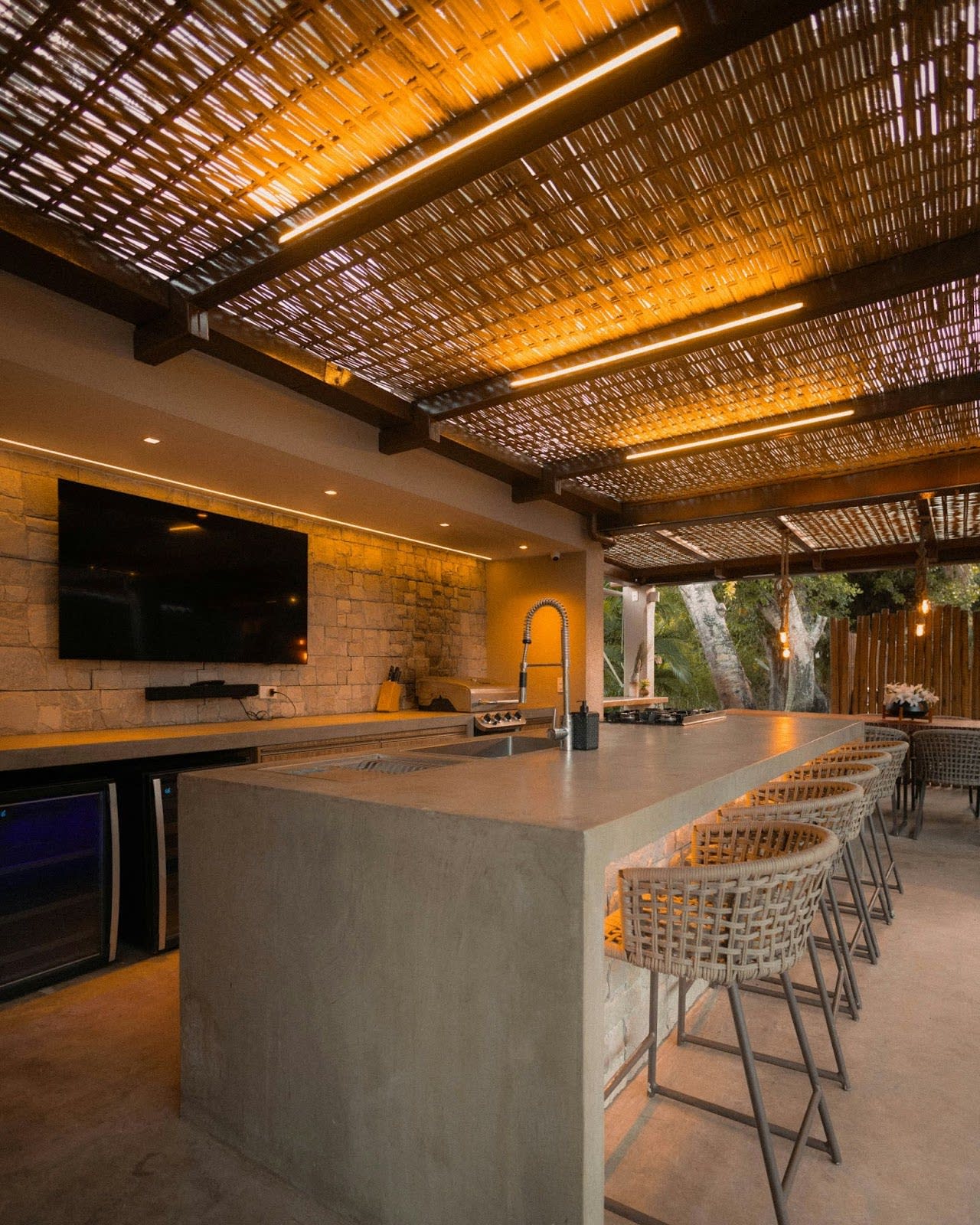
TIPS FOR TUNING ZONES TO REAL LIFE
The best lighting plan is one that works with how you actually use the space. For task zones like cooking and prep, brighter, whiter lighting helps with visibility and focus. Over benchtops and stoves, this might come from directional pendants, under-cabinet LEDs, or spotlights angled with precision.
Dining areas or places where people gather benefit from warmer tones and lower brightness — lighting that makes people want to stay, not move on. This is where dimmable fixtures or ambient layers come into their own. Even small adjustments in colour temperature can shift the whole atmosphere of a zone.
And for maximum flexibility, lighting controls matter just as much as the lights themselves. Consider smart switches or dimmers to adapt lighting throughout the day — from morning prep to evening wind-down.
Zoning doesn’t mean locking a room into one mood. It means giving it the tools to shift between many, with ease.
CONCLUSION
Lighting is often treated as a finishing touch in kitchen design — something you choose after the layout, surfaces and appliances are done. But in an open-plan kitchen, lighting is one of the few tools you have to structure the space without disrupting it.
By thinking in zones — and choosing lights that suit how you actually live — you get a kitchen that works harder, feels better, and looks considered from every angle.
 Want to see more stories from trusted news sources?
Make Real Estate Business a preferred news source on Google.
