



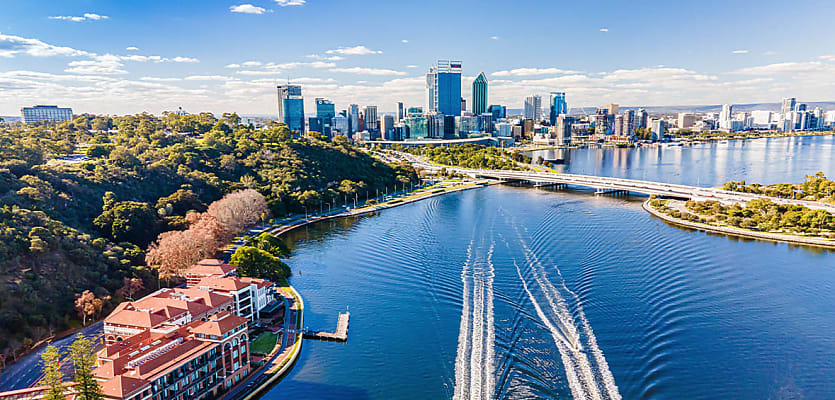

Agents in highly sought-after locations are likely to see significant movement in the property market, as population growth outpaces supply, pushing prices higher.
Australia’s housing market has continued to perform strongly, reaching $12.6 trillion, with home owners in Queensland and Western Australia seeing the bulk of the growth.
According to the latest Cotality April Monthly Housing Chart Pack, dwelling values in Western Australia and Queensland had more than doubled between Q1 2020 and Q3 2025, driven by a widening gap between population growth and dwelling completions.
The data showed that Western Australia, which saw its population rise from 2.66 million to 3.06 million in 2025, experienced the strongest property value growth over the period, with a 119.6 per cent increase.
Similarly, Queensland’s property values soared by 100.2 per cent, while the state’s population also recorded a strong rise, jumping from 5.17 million to 5.67 million.
Cotality head of research Gerard Burg said that the surge in home values across the two states had been driven by dwelling completions lagging significantly behind strong population growth, creating a seller’s market.
“Queensland accounted for over 25 per cent of the total increase in Australia’s population over this period, but less than 20 per cent of the dwellings completed were located in Queensland,” Burg said.
“In Western Australia, across the same period, the share of the country’s population growth was nearly 17 per cent, in contrast to just 10 per cent of completed dwellings.”
“When we see a supply-demand imbalance such as those in Perth or Brisbane, we wind up with a large pool of buyers competing for a small pool of dwellings.”
Burg said that while Queensland’s population influx could be attributed to the state’s warmer climate and lifestyle appeal, its momentum was beginning to cool.
“Queensland has long attracted retirees from other states, and, until recently, offered buyers some more affordable markets compared with other major cities.”
“Net migration to Queensland has started to slow in the last few quarters, and first home buyers may increasingly look to opportunities elsewhere.”
At the other end of the spectrum, Victorian dwelling values grew by the smallest margin of the capital cities, rising by just 17.9 per cent over the five-year window.
Victoria also recorded the highest number of dwelling completions, accounting for almost one-third of the nation’s total.
Burg said that government intervention had helped the state ensure that the percentage of completed dwellings outperformed its population growth.
“Policy support at both the state and federal levels assisted the growth in Victoria dwellings over this period.”
“Almost 63 per cent of this new supply in Victoria was standalone houses, which we see Australians still have a revealed preference for.”
Conversely, the report found that South Australia was an outlier to the emerging trend, recording strong value growth over the period despite population growth and dwelling completions sitting at similar levels.
South Australia almost saw its property values double over the period, recording a 94.2 per cent change in home values, despite the national share of completed dwellings almost levelling out with the state’s population growth.
While NSW experienced a similar balance of population growth and dwelling completions, it recorded a more modest 41.6 per cent growth over the period.
 Want to see more stories from trusted news sources?
Make Real Estate Business a preferred news source on Google.
