



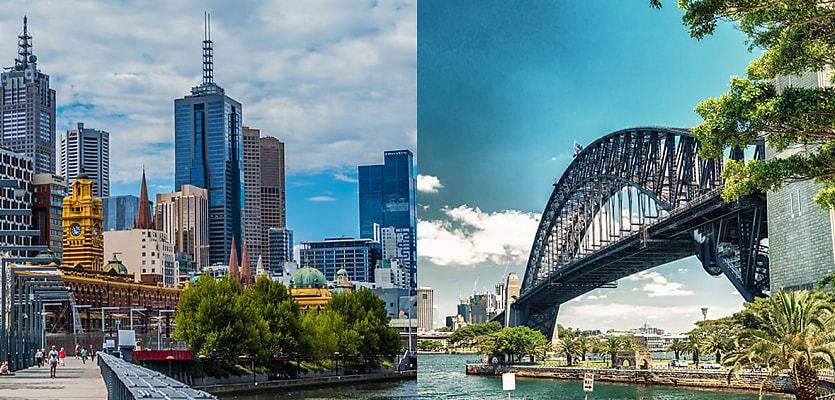

As values soften nationwide, high-end properties have felt the pinch most, with the median upper-quartile home in Sydney losing more than $200,000.
According to Cotality’s latest Monthly Chart Pack for September, while the market was broadly in decline, upper-quartile homes had been hit the hardest by the national housing downturn.
The data found that upper-quartile homes in Sydney and Melbourne have led the declines, falling by more than 10 per cent.
Since November 2025, Sydney’s upper-quartile house values have declined to a median of $2.1 million.
Similarly, Melbourne’s higher-priced houses have declined to approximately $1.25 million since their downturn began in October 2025.
While all markets were experiencing a downturn, Cotality head of research Gerard Burg said higher-value homes were feeling the pinch most.
Burg said the major capitals had fallen further largely because they were among the first to be hit by the downturn.
“Higher-value dwellings in Sydney, Melbourne and Canberra were the first to turn and continue to record the largest cumulative falls,” he said.
“Upper-quartile houses in Sydney and Melbourne are now more than 10 per cent below their cyclical peaks, underscoring the role premium housing has played in driving the downturn.”
Burg said that, in contrast, price declines across the mid-sized capitals had been more evenly distributed across value segments.
The data found that Brisbane’s upper-priced property market declined by around three per cent to $1.47 million, with the decline beginning only in April, six months after Sydney began to fall.
Similar trends emerged across Adelaide and Perth, where upper-quartile homes began to decline in March 2026.
Burg said the downturn had broadened over time, spreading beyond the premium markets where it first emerged.
“Early in the cycle, falling home values were largely confined to higher-priced properties in Sydney, Melbourne and Canberra.”
“More recently, however, home values have also started declining across Brisbane, Adelaide and Perth, demonstrating that the downturn is now affecting a broader range of markets.”
The unit market
Burg said that the same trends were taking place across the nation’s unit markets, but to a lesser extent.
“Units have generally proven more resilient throughout the downturn, supported by their relative affordability and lower entry price points,” he said.
“While higher-value units have generally recorded larger declines than lower-value stock, the gap is smaller than what we are seeing across detached housing.”
In the unit market, Sydney and Melbourne again recorded the largest decline, falling by around 6 per cent.
As a result, Sydney’s median unit price sits at approximately $1.2 million, while Melbourne recorded a median of $788,000.
According to Burg, some exceptions to the emerging trends included lower-value units in Canberra, which fell more than their upper-quartile counterparts.
"Lower-quartile unit values in Canberra are down 2.9 per cent from peak levels compared with a decline of 1.6 per cent across the upper quartile, reflecting an overhang of more affordable stock."
Similarly, Perth and Adelaide both had circumstances that diverged from the national trends.
"Perth’s unit market has recorded larger declines than houses across every value segment, while upper-quartile units in Adelaide have fallen further than upper-quartile houses."
"Despite these exceptions, affordability has generally helped support demand for units and cushion value declines relative to detached housing," Burg said.
 Want to see more stories from trusted news sources?
Make Real Estate Business a preferred news source on Google.
