



The property sector is demanding Canberra take responsibility for curbing inflation as a fifth rate hike deepens the market downturn, with government spending under fire for fuelling the crisis.
The RBA has raised the cash rate by 25 basis points at its Melbourne Cup day meeting, taking it to 4.85 per cent, its highest level in 18 years.
The board’s decision followed higher inflation results, with the consumer price index (CPI) rising 4.3 per cent in the 12 months to September 2026, up from 4.0 per cent in the 12 months to August.
Raine & Horne Group executive chairman Angus Raine said the fifth rate hike had left Australians bearing the financial burden, despite having little control over the forces driving inflation.
He pointed to the conflict in the Middle East as a factor pushing up fuel and fertiliser prices, but argued that federal government spending was generating far greater demand across the economy.
“Households are constantly having to revise their spending budgets and scale back where they can in the face of soaring interest rates,” Raine said.
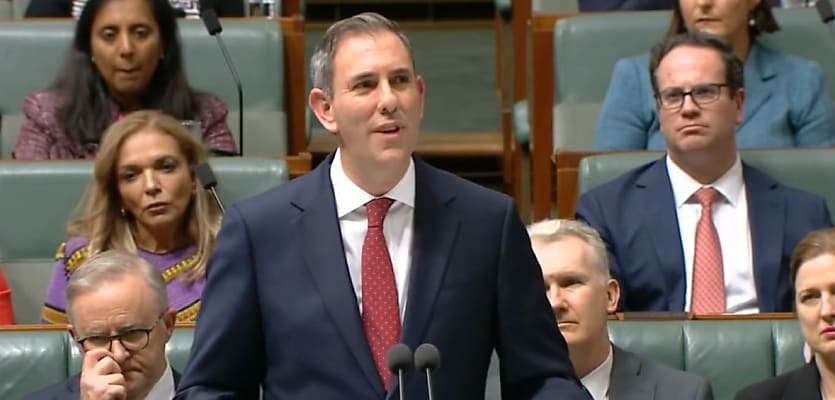
“Meanwhile, in Canberra, Jim Chalmers and the Federal Labor Party are spending like drunken sailors.”
Following today’s hike, Raine has called on the government to justify the inflationary impact of its spending and infrastructure pipeline, arguing Australians deserve greater transparency around the costs being passed through the economy.
He said that heavy government investment in infrastructure was adding to construction cost pressures, while uncertainty surrounding property investment taxes risked discouraging rental supply.
Government papers showed more than $17 billion was earmarked for infrastructure projects in the 2025–26 budget, followed by a $120 billion rolling national infrastructure pipeline in the 2026–27 budget.
Similarly, LJ Hooker head of research and business intelligence Mathew Tiller said the cash rate hike was likely to dampen buyer activity, forcing some purchasers to scale back their budgets or delay buying.
He said that prolonged weakness in demand could also undermine the financial viability of new housing developments, complicating efforts to deliver enough homes to meet Australia’s longer-term needs.
Additionally, he warned that rising interest rates would further squeeze investors’ cash flow, discouraging them from selling existing properties, particularly while they could still benefit from negative gearing.
“Some investors may be juggling finances at the moment, but it doesn’t mean that tenants will be affected automatically,” Tiller said.
“Rent depends on rental availability, demand and what tenants can afford and with vacancies rising and rental growth easing, there will be a limit to how much extra costs can be passed on.”
According to Compare the Market’s economic director David Koch, the latest hike was “an extraordinary burden” on mortgagees trying to pay off their loans and attain the Australian dream of home ownership.
Modelling showed that, assuming banks pass on the November rate hike in full, monthly repayments on an average $730,719 mortgage will be $538 higher than at the start of 2026, adding $6,460 to annual costs.
For borrowers with a $1 million mortgage, the increase will reach $737 a month, or $8,840 a year, compared with January 2026.
Koch said the impact of a 0.25 percentage point increase extended well beyond higher monthly repayments, potentially adding $43,029 in interest over a 30-year average-size loan for borrowers paying a 6.5 per cent rate instead of 6.25 per cent.
“It is really hard to see that home owners are doing all the heavy lifting by shouldering these rate hikes, but to sympathise with the RBA – this is really the only lever they’ve got,” Koch said.
“That’s why I think governments have got to get on board and start helping us fight inflation. They can’t just continue being their own island, spending up big and fueling demand. And that’s governments at all levels: local, state and federal.”
 Want to see more stories from trusted news sources?
Make Real Estate Business a preferred news source on Google.
