



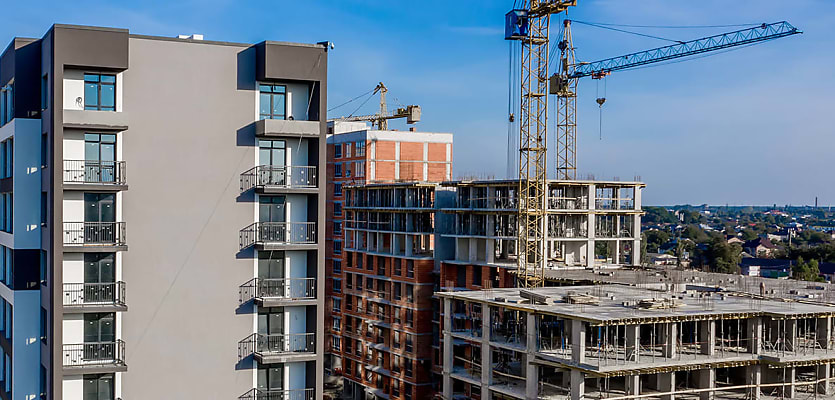

Soaring construction costs and red tape have restricted housing supply and pushed prices higher in 2025, leaving a generation of renters at risk of being locked out of ownership, with pressures set to intensify in 2026.
A lack of construction has led to a decline in new-build supply, increased competition, and higher property prices over the past year, and one property expert said it is unlikely to improve in 2026.
Tallpopie co-founder Darragh Heard said that while there was a “preconceived idea” that developers were landbanking and inflating costs for profit, buyers were typically unaware of how much construction costs had risen.
Over the past couple of years, increased construction costs have harmed the viability of new developments, often making them too expensive to build, reducing supply, removing flexibility and increasing the price of properties currently on the market.
Heard said that with building costs rising by 30 per cent over the last five years, the typical cost of delivering a mid-rise apartment in Sydney had risen from $666,000 in 2018 to $905,000 in 2023, and has continued to increase.
She said that while policies have supported the construction of medium-density housing developments in well-connected locations, approval processes have made it difficult to build new housing.
She added that streamlining planning approvals, being transparent with construction levies, and introducing a national building code to eliminate state-by-state variations would provide a significant boost to the industry.
“We have reached a point where regulation, however well-intentioned, has become a barrier to affordability,” she said.
“If we want to fix the housing crisis in 2026, we need a system that rewards those willing to take on the risk of creating new supply rather than demonising them.”
To increase the supply of new housing, Heard said developers must be supported by reducing construction costs and removing red tape around new builds.
“Government build fees, red tape, inflated insurance requirements, and material costs are squeezing profit margins so tight that large-scale new apartment developments are at risk altogether.”
According to Heard, the rising cost of construction materials has left developers in a “brutal” position, as the feasibility of building the required housing stock spirals.
“This is why we’re seeing an exodus of first-time buyers from the apartment market. The only projects still proceeding are luxury builds catering to the wealthiest, older buyers or offshore investors.”
While the lack of housing has pushed property prices up, Heard said it has also created a generation forced to rent longer, straining rental availability and vacancy rates and intensifying competition.
She said the tightened supply has had negative impacts that have been felt “through the entire housing system.”
“When first home buyers can’t buy, investors can’t exit the market with a healthy return.”
“When renters can’t find homes, essential workers leave the city. And when developers can’t make projects viable, the pipeline of new housing dries up.”
With approximately 40 per cent of earnings going towards housing costs, Heard said that soon the only way for many to purchase a property would be through parental funding.
“Young families can no longer afford the kinds of homes that should naturally be their next step up.”
“The middle of the market has collapsed, and we are being left with two extremes between those who can buy because they already own, and those who can’t because they never did.”
“We are seeing the ‘bank of retired mum and dad’ become one of the largest financial institutions in the country. Those without family wealth are being pushed into a lifetime of renting, with little prospect of ever catching up,” Heard concluded.
 Want to see more stories from trusted news sources?
Make Real Estate Business a preferred news source on Google.
