




Solar panels could be a bigger selling point than agents realise, with buyers increasingly eyeing lower running costs and sustainable features when choosing their next home. Here is how to market energy-efficient properties.
New data has shown Australians are increasingly seeking ways to manage ongoing costs and future-proof their homes, with many prioritising sustainable and energy-efficient features.
According to the “After” segment of Great Southern Bank’s third annual No Place Like Home report, 85 per cent of Australians preferred to buy a home with existing renewable and energy efficiency technology already in place.
Barry Plant Melton sales executive and auctioneer, AJ (Ankit) Jhanji, said that younger buyers were often more inclined to seek out renewable features, particularly first home buyers in the 22 to 32 age bracket.
He said that across the board solar panels were primarily driving interest, and were also the most common sustainable feature seen among properties.
“Any property which has already got solar panels installed, buyers are highly motivated to go with it. Definitely helps with the costing and all,” he told REB.
Given that not all properties had renewable features, Jhanji said agents needed to ensure they showcased the characteristics as best as they could.
“Whenever we’re doing the inspections, we tend to walk them through the property and then highlight every feature,” he said.
“If the property has solar panels, plus batteries in there as well, we generally try to take them through that, tell them how much the cost savings would be for those kinds of things.”
Jhanji said agents should particularly appeal to families and other owner-occupiers, given they were likely to live in the property for a minimum of five to seven years.
However, he advised against overloading buyers with information to avoid confusing them, as they were primarily focused on the suburb, amenities, and property price.
“If I go into the data of how much they’re going to save with the solar panels and everything, it’s just going to complicate things,” he said.
“Keep it simple, [tell them]: ‘You know what? You’re getting this thing as well, you’re going to enjoy the benefits of something which is already there. That’s an additional benefit.’”
Additionally, he said agents should ensure they use keywords in their listings so REA’s AI tool could pick up on the phrases and compile them into separate “property highlights” boxes.
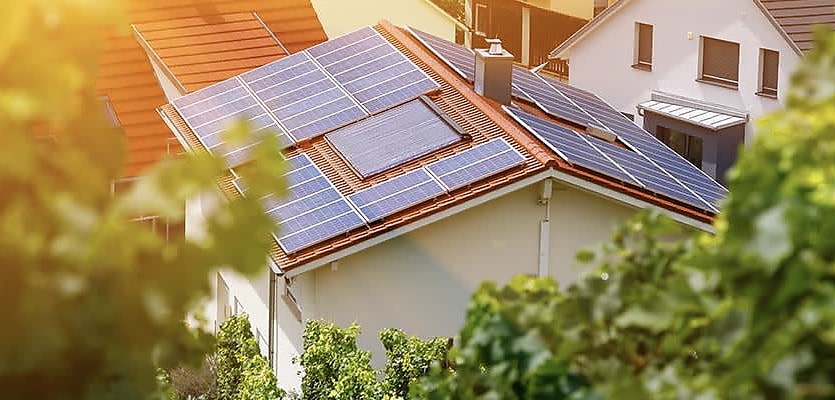
Jhanji also said images can draw attention to the features and help them stand out.
“For the solar panels, what we do is generally take aerial shots for the property, and that does highlight that you’ve got a solar panel.”
The data showed energy-efficient appliances (37 per cent) and solar panels (35 per cent) were the most common upgrades already installed, with battery storage at 14 per cent.
However, battery storage systems were the most popular renewable upgrade Australians planned to install over the next five years (30 per cent).
This was followed by energy-efficient appliances (29 per cent) and solar panels (28 per cent), highlighting the continued focus on improving energy efficiency and future-proofing homes.
Great Southern Bank chief customer officer, Rolf Stromsoe, said Australians were increasingly thinking about the total price tag of owning a home, with renewable features able to help lower ongoing costs.
“ That’s why we’re seeing renewable features become part of what Australians consider a valuable home.”
 Want to see more stories from trusted news sources?
Make Real Estate Business a preferred news source on Google.
