



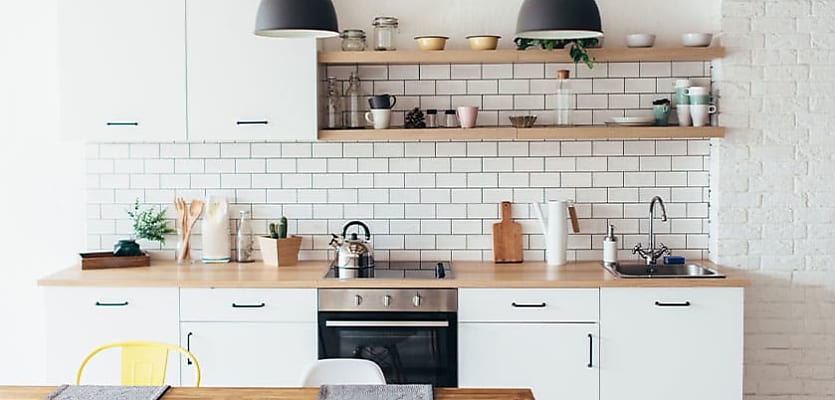

Agents will have to better identify the spaces that genuinely drive value and strategically showcase a property’s strongest features to maximise results, according to a recent white paper.
While bedrooms and bathrooms used to be significant value drivers, recent data suggests the market may be shifting focus, with buyers now prioritising kitchens and living areas.
According to The rooms that actually sell homes, a recent white paper from Little Hinges, during virtual inspections, buyers spent almost twice as long in the dining, kitchen, and living space as in other areas of the home, signalling a change in how they evaluate properties.
The report used data from more than 12 million digital inspections and found that visitors spend 37.6 seconds in a standalone loungeroom and 36.3 seconds in standalone kitchens.
In comparison, buyers spent an average of 21 seconds in other rooms of the home.
Open-plan kitchen, living, and dining areas accounted for most of the inspection time, with buyers spending an average of 65.2 seconds taking them in.
The report said the significant increase in time spent in high-traffic areas showed buyers have become more mindful of living spaces and their role in their everyday lives.
Little Hinges CEO Josh Callaghan said the old-school idea that bathrooms and bedrooms were the dominant value points was no longer true.
“Property is a value-driven decision, but the way it’s assessed is outdated and reduced to a handful of structural metrics such as bedrooms, bathrooms, car spaces, and land size,” Callaghan said.
“Those details matter to qualify a home, but they don’t explain what people are actually looking at and engaging with when they decide whether it will work day-to-day and if the price makes sense.”
Bedroom and bathroom
Callaghan said that bedrooms and bathrooms were assessed quickly to ensure they met expectations, rather than being explored in depth as other rooms were.
“Viewers confirm they meet expectations, but behavioural patterns show these rooms usually operate as hygiene-factor checkpoints, not primary value anchors.”
Similarly, he said that bathrooms and laundries also recorded low inspection times at 16.7 and 18.2 seconds, respectively.
“This shorter dwell time indicates people are confirming key functional details such as fixtures, finishes and layout before moving on.”
“Attention to bedrooms and bathrooms also remains relatively stable across property value tiers.”
“Average dwell times do not increase meaningfully in higher-value homes, indicating that while these rooms are essential qualifiers, additional inspection does not significantly change judgment.”
Callaghan said that the shift in behaviour showed that bedrooms and bathrooms had become baseline checkpoints in the inspection process for buyers, spaces that must meet expectations rather than value drivers.
Drives and desk chairs
According to the data, office spaces and garages continued to be premium features that attract buyer interest.
Callaghan said the data showed that as dwelling values increased, buyers spent more time in the office spaces, with properties over $1.5 million seeing buyers spend more than 42 seconds carefully examining the room.
“At these higher price points, home offices are more likely to be purpose-built spaces, prompting deeper inspection rather than a brief visual scan.”
Similarly, garages were seen as an extra amenity, with buyers spending a large amount of time there, and were inspected for an average of 36.8 seconds.
Callaghan said that buyers’ longer garage check signalled a deliberate evaluation of the space rather than a “quick visual check”.
“This level of engagement indicates that garages are not treated as incidental storage spaces, but as functional areas that contribute to overall usability.”
“This matters because garage space is rarely highlighted as a primary value driver, yet behavioural patterns show buyers and renters devote time to assessing.”
What this means for agents and owners
Callaghan said the data showed that agents needed to identify the rooms with the most value in the home, and adopt a strategy that highlights these key areas to prospective buyers.
“Instead of presenting every room equally, inspection behaviour shows which spaces anchor value perception and which operate as baseline qualifiers.”
“Understanding where attention concentrates allows agents to guide presentation, staging and marketing toward the rooms that materially influence decision-making, pricing confidence and buyer or renter engagement.”
Additionally, he said that the data highlighted the need for developers to create a space with a layout that capitalises on certain factors.
“Rather than relying solely on prescriptive room counts, this insight supports decisions around open-plan configurations, circulation efficiency, storage provision, and lifestyle spaces that align with how value is actually assessed at different price points and in different states.”
Callaghan said the insight provided home owners with a roadmap for renovation and improvement that could affect a home’s perceived value.
“Behaviour shows which spaces people return to, spend time in and use as reference points when forming judgements.”
“This allows home owners to make more informed decisions about where upgrades will meaningfully change how a home is experienced, rather than spreading investment evenly across rooms that function primarily as qualifiers.”
“Ultimately, this research shows that value is not determined by what a home contains, but by how it is experienced,” Callaghan concluded.
 Want to see more stories from trusted news sources?
Make Real Estate Business a preferred news source on Google.
