




Agents who strategically communicate energy-efficient features can boost sale prices by up to 66 per cent, as buyers seek out green homes for cost and comfort benefits.
New data showed that demand for energy-efficient features has been rising, creating a golden opportunity for higher sale prices and rental returns.
The Efficiency Edge report, by Cotality and the Real Estate Institute of Australia (REIA), found that “green” properties could be sold for 66 per cent above local suburb medians, while rental returns could rise to 35 per cent.
Cotality said buyers and renters have been placing greater weight on features that influence energy use, as other costs of living continued to rise.
“For most buyers, renters and investors, home performance is about more than sustainability. It affects comfort and the ongoing running costs of owning or occupying a home,” it said.
According to REIA president Jacob Caine, agents had always helped consumers make sense of property, with energy efficiency being another type of essential, sought-after advice.
“A home’s orientation, insulation, glazing, heating, cooling, solar, draught sealing and hot water systems are not technical side issues,” he said.
Energy efficiency linked to higher premiums
Cotality’s data showed that energy-efficient homes tended to attract stronger demand and price premiums in many markets.
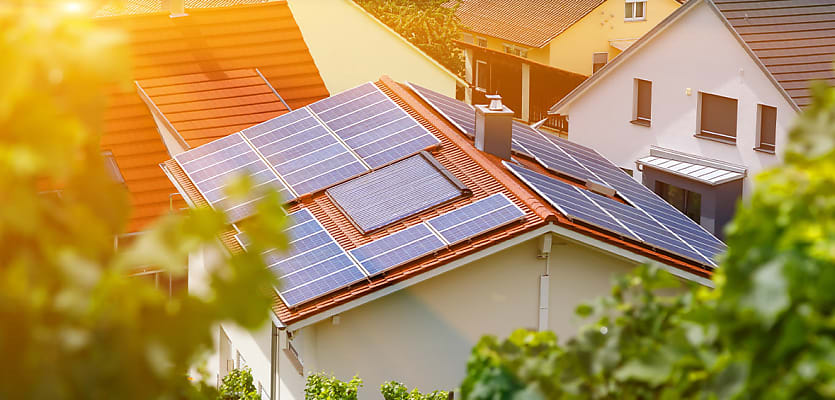
Its analysis from 2025 of more than six million Australian homes found houses with solar panels achieved prices around 2.7 per cent higher than comparable properties without it.
Further, each additional Nationwide House Energy Rating Scheme (NatHERS) star was associated with an estimated average 1.3 per cent greater value nationally.
Caine said that green features heavily influenced the price of properties, how they felt, and, increasingly, how the market valued them.
“There is a growing commercial case that energy-efficient features have a positive influence on buyer engagement and price,” he said.
“Agents who understand this impact will be better placed to advise vendors, support purchasers and property investors, and identify value that might otherwise be missed.”
Additionally, Cotality’s report found multiple examples where a property’s median price had been boosted by energy-efficient features.
One property in Cygnet, Tasmania, sold 66 per cent above the median for comparable properties, with features including thermally broken double glazing, an insulated concrete slab, hydronic heating, and a fully integrated battery system.
“The home was not only more efficient, but more comfortable, more resilient and less exposed to rising household energy costs,” Cotality said.
Another dwelling, in Mount Hawthorn, Western Australia, achieved a 14–24 per cent boost in its sale price compared to similar properties, while rental returns were around 31 per cent higher.
Cotality said the home offered buyers natural light, cross-ventilation, lower running costs and a high level of liveability despite its smaller size.
Energy efficiency was achieved through thermally broken double glazing, crossflow ventilation, strategic shading and polished concrete flooring, while a wood burner provided efficient heating during winter.
Cotality said that to take advantage of green features, real estate professionals did not need to be technical experts, but should be able to explain home performance in practical language
“Those who build that capability early will be better placed to advise clients, communicate value and respond to changing market expectations,” it said.
It said that, as trusted advisors, agents were uniquely positioned to be able to communicate a property’s genuine points of difference, its solar generation capability, system size and battery storage capacity.
“This is part of the agent’s fiduciary and due diligence responsibility towards their clients, which guards against misrepresentation and promotes a better understanding of the associated benefits.”
Disclosure could unlock opportunity
According to the report, governments nationwide have been considering the benefits of mandatory energy efficiency disclosure, which would unlock new opportunities in property sales and rentals.
Research from the Australian Government’s Behavioural Economics Team found 86 per cent of people surveyed considered it important to see a home’s energy rating when buying, and 75 per cent when renting.
The ACT has mandated energy efficiency disclosure in property sales since 1999, while NSW is conducting a trial ahead of a possible mandatory scheme, and Victoria will have minimum energy efficiency standards for rentals from next year.
Cotality head of sustainability solutions, Richard Griffiths, said that enabling better access to home performance details would help consumers make better-informed decisions.
"For most Australians, energy performance isn’t primarily about sustainability. It’s about living in a home that is comfortable and affordable to run,” he said.
“Putting them in buyers’ hands will give added choice and transparency and make energy efficiency part of the conversation in the same way as land size or the number of bedrooms.”
 Want to see more stories from trusted news sources?
Make Real Estate Business a preferred news source on Google.
