
The property management industry is at a crossroads. Rising expectations, constant regulatory changes, and shrinking profit margins are pushing property managers to work harder than ever, creating a pressure cooker environment.
Against this backdrop, technology is both a gift and a curse. While software promises to simplify workflows, improve visibility, and enhance the client experience, the lure of “best-in-breed” platforms has left many agencies with fragmented systems, inefficiencies, and increased risk.
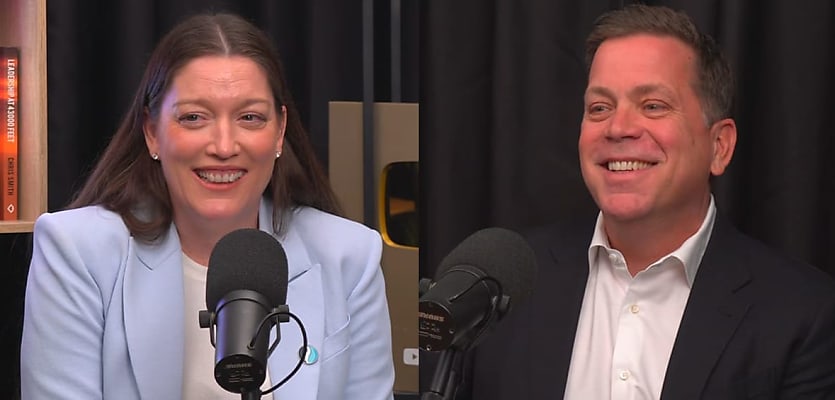
On a recent REB podcast, host Liam Garman, Ailo CEO and co-founder Ben White, and Harcourts Solutions Group director of property management Jodie Stainton, unpacked what property managers really need, and what solutions are just shiny distractions.
And while it’s important for business leaders to be selective with the right tools for them, White’s “third wave” of property management demands a culture of innovation and decisive action across every step of property management, keeping the client at the centre of all processes.
The risks of inaction are clear: principals will be overtaken by competitors.
The “third wave” of property management
Property management is shifting into its “third wave”, powered by technology that lifts the client experience, White told the podcast.
The first wave involves digitised paper, replacing index cards and spreadsheets with software. The second wave introduced cloud-based systems, enabling connectivity, mobile apps, and digitised workflows. But, he said, neither wave fundamentally changed the client experience.
“Now, the focus shifts to the consumer,” White said. “Property management is no longer just about rent collection, repairs, or finding tenants. It’s about building ongoing relationships, creating value, and delivering a holistic experience for landlords and tenants alike.”
However, Stainton warned that chasing shiny new platforms and solutions creates business risk, with clients easily falling between the cracks.
To put it simply: multiple systems create more gaps for clients to slip through, increase errors, and slow staff down.
“For the past decade, everyone chased ‘best-in-breed’ platforms, bolting specialist products onto their ecosystem,” she reflected.
“If one system doesn’t sync, your core platform loses visibility. Suddenly, your team doesn’t know where the client is at. That gap creates risk, confusion, and anxiety.”
“Our landscape had become fragmented; from Trello, Asana, Slack, Teams to multiple checklists, all trying to fill gaps our core system couldn’t handle,” she said. “Front desk staff were manually assigning emails daily. Property managers didn’t even realise how much workaround was required to get the job done.”
She argued that reliability and clarity outweigh flashy features.
“I’ve moved away from the idea that every tool must be feature-rich. I’d rather accept a small trade-off in capabilities for a unified system that always shows the true client status.”
That clarity, she said, is transformative for staff and clients – and why she uses Ailo. “It’s why I waited before adopting Ailo. Now we have both strong capabilities and complete visibility. The improvements are tangible, and the pace of change makes the next six months incredibly exciting.”
Introducing a unified platform, she said, changed everything.
“We involved the team from the start: study tours, expert sessions, hands-on learning. Transitioning was like learning to drive: stressful at first, but soon intuitive. Within five weeks, the improvements were clear, and the team agreed it should have happened sooner.”
But here's the catch: this shift is happening whether individual agencies are ready or not. It's tempting to resist change, waiting for the 'perfect moment' to adopt new systems.
And to this point, White warns that hesitation is the biggest risk of all.
Inaction: The business risk we fail to address
Of course, embracing change to improve efficiency and the customer experience is easier said than done.
This willingness to embrace smart and efficient change must be demonstrated by the company leadership, etching a culture of acceptance and excellence at the heart of the company’s DNA.
Because without change, one risks being outpaced by competitors who continue to innovate.
“Many people resist change, thinking it’s safer to wait. But in a rapidly evolving industry, inaction is effectively a step backward. Those who hesitate risk being left behind as property management polarises,” White explained.
At an agency level, Stainton believes complacency is one of the biggest risks property managers face. Agencies that operate on an “ain’t broke, don’t fix it” mentality fall behind, because the systems they adopt reflect their culture.
Stagnation, she says, is often a sign that a business is quietly failing.
To overcome this, a compelling vision from the top is critical: clear business plans, shared revenue and cost metrics, and ownership of outcomes provide staff the framework to reach their potential.
Celebrating small wins, providing autonomy, and supporting teams through challenges fosters a culture willing to embrace change. Leadership, at its core, is about helping people see the bigger picture, believe in themselves, and work toward something meaningful.
Ailo’s culture of transparency: Helpful for landlords and tenants
Two agencies can manage identical properties yet deliver completely different outcomes. The difference, White argued, comes down to culture and the willingness to truly put the client first.
“Transparency is a big part of it,” White said. “I’m always impressed by the courage it takes for agencies moving to Ailo to be fully transparent, because that’s a cultural statement. You’re saying to clients, ‘I’m going to be open with you.’”
He explained that Ailo’s design deliberately prevents agencies from hiding behind systems. Features can’t be switched off to mask performance or patch over communication issues.
“That’s the point,” he said. “It tells clients: here’s how you contact us, here’s what we see, and here’s the experience you can expect. It’s not a technology statement; it’s a cultural one.”
White said many Ailo agencies now use this transparency as a selling point when winning new clients, showcasing the client experience directly rather than relying on marketing promises. “That’s the journey we’re on,” he said. “Helping agencies transform culturally, not just technically.”
Why good property management is beneficial for business
This cultural clarity has tangible effects for both landlords and tenants. A renter’s experience, and a landlord’s return, is shaped not by the asset alone but by the responsiveness, engagement, and service of the property manager.
Technology can support service, but it cannot replace how clients feel they’re being served. Embedding client-centricity into key performance indicators, team meetings, communication norms, and decision-making reinforces the behaviours that matter. Inviting clients into strategic conversations, for example, helps staff understand accountability, transparency, and authenticity in practice.
Agencies that invest in people, focus on quality, and prioritise the client experience consistently achieve higher rents and stronger long-term outcomes. Excellence, not fee-cutting, is what drives sustainable revenue.
You can listen to the podcast between Liam Garman, Ben White and Jodie Stainton here.