



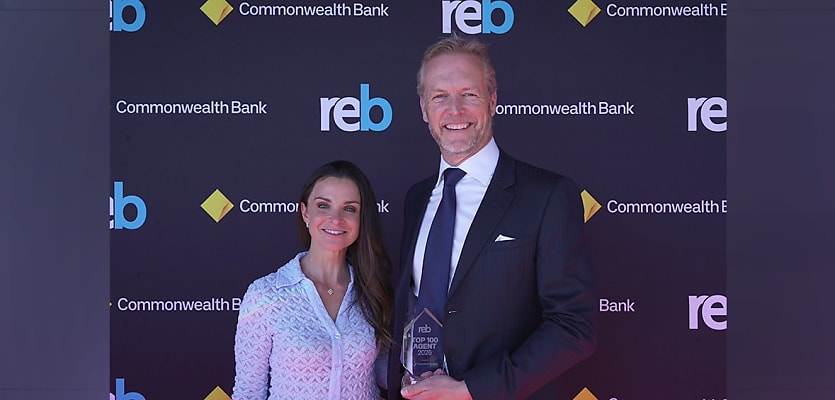

What if the secret to becoming a Top 100 agent is a good work/life balance, not just long hours? One top performer reveals what it takes to stay ahead.
While many new starters in the industry feel the need to hustle day and night to achieve results, Belle Property Lower North Shore principal Matthew Smythe said agents don’t need to sacrifice balance.
The REB top 100 agent said he found success and eventually became one of Australia’s top agents while striking a balance that let him stay fully locked in, whether at home or at work.
In the beginning, Smythe said agents need to find a middle ground rather than get swept up in the role’s highs and lows.
He said agents will sometimes lose out on a listing or not sell a property, and the ability to keep pushing is what sets high performers apart from the rest.
“There are just so many ups and downs that will come over a year, five years or 20 years, that unless you can avoid getting too high or too low, the industry can eat you alive,” Smythe said.
“But those that succeed and have been doing it for long enough will tell you just to have a balanced view, know that as long as you’ve done the best you can, you can go to bed that night, have a good night’s sleep and go again tomorrow.”
Finding a work/life balance
Having begun his real estate career later in life at age 31, Smythe said that while it was important to give 100 per cent when at work, being able to disconnect and step away in his personal life was a major factor in his success.
He said that when he went on holiday or spent time with family, it was important not to split his attention between loved ones and work.
“I’d put my phone in a safe in the hotel and wouldn’t touch it for days. I’d have it diverted to the office so my EA would look after calls, so family were my main priority, and they really appreciate it,” he said.
“So then they would be alright with me not being there at 6pm for dinner every night because they knew I was working to have a wonderful holiday with them.”
When he was in the office, Smythe said he approached every day with the mentality that while he was there, he would work harder than all his competitors.
Despite appearing in REB’s Top 100 Agents several times, Smythe said his definition of success may differ from what many consider traditional metrics.
He said that rather than measuring his GCI, his house or his bank account, he measured success through the intangibles.
“I think you just need to enjoy the moments when they come. I love the fact that that happens in my world, but I also like to peel it back to, ‘Is it all that I wanted out of the industry’.”
“When I take a more holistic view of it, I enjoy the success the industry brings, but I also take the view that that’s not who I am; it’s just part of who I am.”
Tips to become a high performer
Smythe said growth in the industry often comes in stages and new agents have to work much harder to reach a similar level of success as more experienced agents.
He said younger agents often had more time to dedicate to the role and those willing to make sacrifices set themselves up for a prosperous career.
“When you are a bit younger, you can go flat to the floor, and a lot of the agents that work that hard that early really do get ahead quite quickly,” Smythe said.
“When they are in the office, they go flat out, they don’t mess around, they’re focused and they’re committed.”
For agents looking to cement themselves in the industry, Smythe said they needed to take a long-term view.
“Unless you are thinking about tomorrow, you’ll be redundant anyway, or you’ll be swept aside by another agent,” he said.
Additionally, Smythe said that while individual performance is important, the nation’s top agents didn’t get there by themselves.
He said agents need to identify their strengths and build a team around them to account for areas they may struggle in.
“If you’re an agent out there on your own and you are the only person in your team, that’s great, but it also has its limitations,” he said.
To improve their service, Smythe said agents need someone to handle administrative tasks, freeing up time to prioritise relationship building.
“If you’re doing something that’s not relationship building and it’s not relationship building, then you have the wrong team structure, or you need someone to help you go to the next level,” Smythe said.
“It’s relationships that win the business, and it’s relationships that sell the business,” Smythe added.
 Want to see more stories from trusted news sources?
Make Real Estate Business a preferred news source on Google.
