


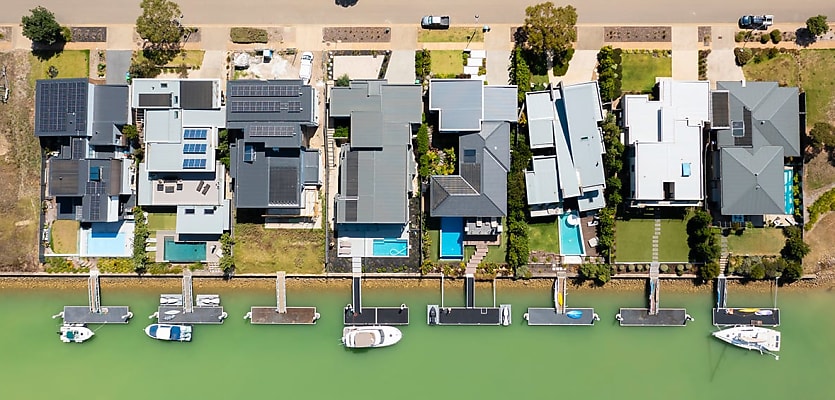

As summer peaks, investor demand for coastal properties rises, requiring buyer’s agents to be strategic, understand clients’ goals, and identify the best investment markets.
Every summer, paradisiacal beaches, small-town charm, and palm trees lure investors to coastal towns, but successful investing requires strong fundamentals, long-term growth, and conservative cash flow.
According to Smash Property Investing director Nick Voegt, interest in coastal towns has ramped up over the years, driven by lifestyle appeal, affordability, and remote work.
“Remote work, lifestyle prioritisation, and the desire for a ‘sea change’ are all pushing buyers to places that feel better to live in without the big-city price tag,” Voegt told SPI.
“Many can now sell in the major cities and comfortably buy into lifestyle markets with cash left over.”
Voegt said that while he understands the appeal of coastal towns, investors should ensure their beachfront purchase aligns with their strategy and focuses on long-term fundamentals rather than short-term rental benefits.
“Lifestyle can be part of the decision, just don’t let it be the decision.”
He said that buyer’s agents needed to be the circuit breaker, slowing clients down, educating them on the difference between a lifestyle purchase and an investment, and grounding advice in data and on-the-ground insight.
When investing in coastal regions, Voegt advised using a few practical filters, such as following locals rather than tourists, and targeting areas with high owner-occupier rates and population growth.
“If locals want to live there, not just holiday there, you're on solid ground.”
Additionally, he said that investors should not be emotional about their purchases, focusing on land value rather than an Instagrammable kitchen and prioritising well-located blocks with potential for extensions, granny flats, or subdivision.
“On the growth side, focus on owner-occupier appeal in these markets, land value, and local economic strength, the real drivers of capital growth over 10–20 years.”
Voegt also recommended running the numbers to ensure the debt was serviceable on standard rental income.
He said that, like for any investment, investors should review all data before buying, including vacancy rates, rent growth, days on market, vendor discounts, infrastructure, and employment mix.
“I want the numbers to work on a conservative 12-month lease first, and treat any short-stay upside as a bonus.
“Stress-test your cash flow with shorter booking seasons, higher management costs, and periods of zero income.”
Voegt said that investors looking for coastal hotspots should consider the Sunshine Coast, Newcastle/Hunter, Coffs Harbour, the Illawarra region, Geelong, and Adelaide’s southern coastal corridor, which still have strong fundamentals, diverse economies, year-round demand, and tight rental markets.
“Where I get more cautious is in small, tourism-heavy towns with limited employment and a large proportion of short-stay accommodation.”
“For example, Lakes Entrance (Victoria) and Agnes Water (Queensland) are beautiful, but the fundamentals can be more volatile, particularly when tourism softens or regulations shift.”
According to Voegt, regulatory risk has risen, with tighter short-term rental rules, night caps, and compliance requirements in NSW and Victoria making it crucial for Airbnb-dependent investors to stay informed.
“In addition, coastal markets can carry climate-related risks, which buyers need to factor into holding costs.”
“Sometimes the best advice buyers agent can give is ‘Yes, this town is beautiful… but based on the numbers and your goals, there are stronger options.”
“Being willing to say that – even when it’s not the easy answer – is where trust is built,” Voegt concluded.
 Want to see more stories from trusted news sources?
Make Real Estate Business a preferred news source on Google.